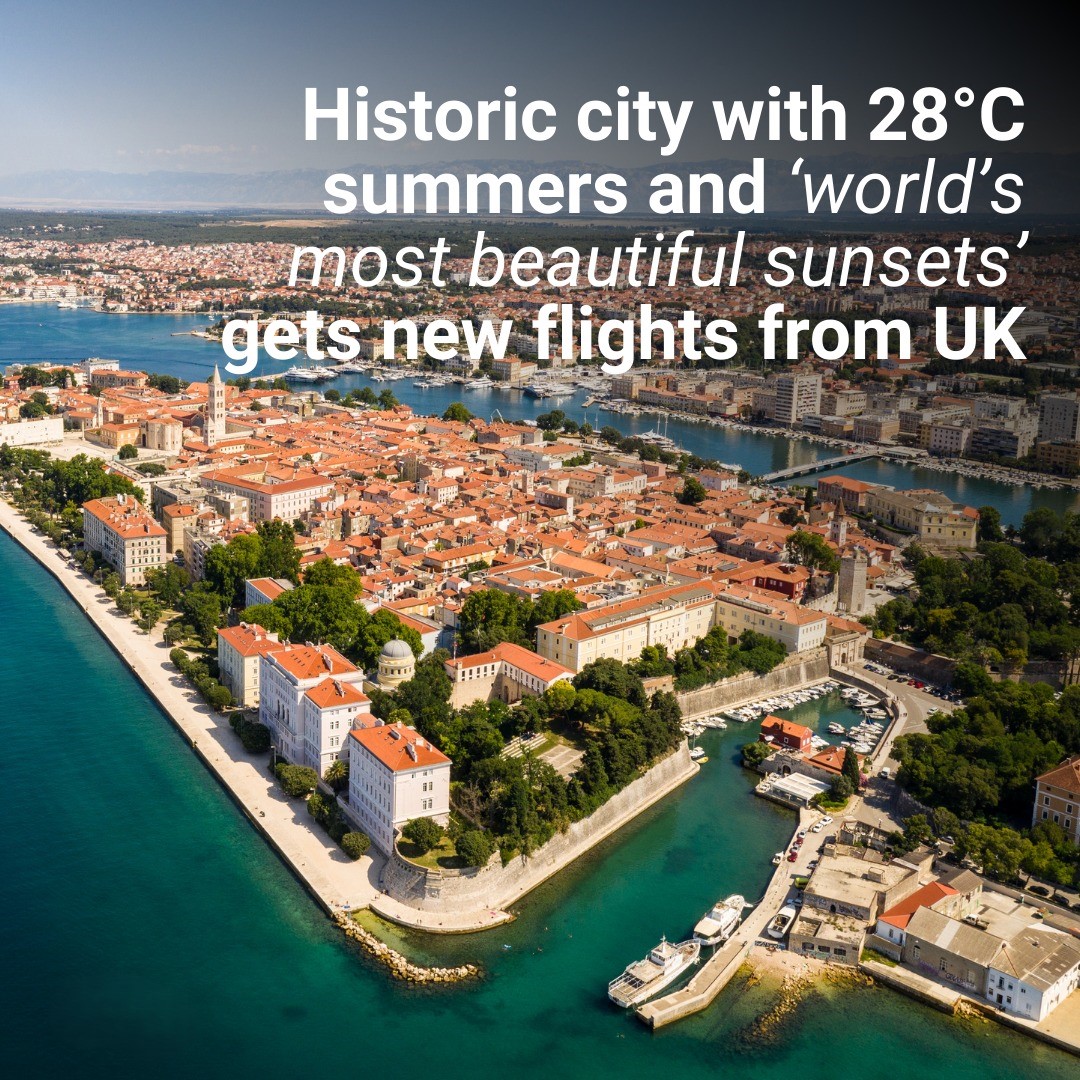
Roman ruins, delicious food, and one of the world’s only sea organs — these are just some of the attractions in Zadar, one of Croatia’s most beautiful but underrated coastal cities.
With average summer temperatures hitting 28°C, this historic town is an idyllic spot for soaking up the Adriatic sunshine. Just as toasty as Italy, with significantly fewer crowds.
Often nicknamed Croatia’s ‘capital of cool’ for its blend of ancient history and modern, youthful energy, Zadar has a flourishing culinary scene and vibrant nightlife that make it feel fresher than Dubrovnik and Split.
It’s easy on the wallet, too: expect beers for around £2.30 and cocktails for less than a fiver, making it a great choice for travellers who love a bargain without compromising on culture.
And soon, it’ll be even easier to go there for a long weekend, as TUI is about to launch new package deals with easyJet and Ryanair.
Starting in summer 2026, flights will be leaving from major UK airports across London, Manchester, Birmingham, Edinburgh and Leeds, with several options ranging from three to 14 nights.
Things to do in Zadar
A crossroads of culture for some 3,000 years, several civilisations have left their mark on this seaside city.
You can chart the passage of time by wandering the Roman ruins, Venetian fortifications, Romanesque cathedrals and Byzantine churches that dot the Unesco-listed Old Town and stand as relics to the past.
Most of Zadar’s top attractions are contained within the walls of its Unesco-listed Old Town, which sits on a narrow peninsula that juts out into the Adriatic.
Start at Foša, a tiny marina flanked by the Land Gate that was erected by the Venetians in 1543.
Follow the city walls (which got a facelift in 2020) along Kalelarga – the local name for the main street – down to Riva, Zadar’s picturesque palm tree-lined seafront and beating heart.
According to Alfred Hitchcock, ‘Zadar has the most beautiful sunset in the world, more beautiful than the one in Key West, Florida, applauded at every evening.’
These are best viewed from the Greeting to the Sun, a 22m-wide circle set into the waterfront promenade.
Designed by Nikola Bašić, the installation absorbs sunlight; after sunset, the energy powers lighting elements to produce a colourful light show.
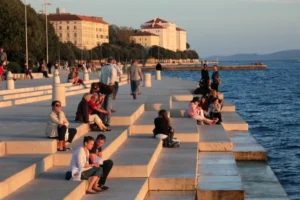
While you’re by the coast, it’s worth checking out another of Bašić’s bizarre creations: the sea organ, which plays random melodies using the power of the waves as they lap onto tubes hidden under marble steps.
Our Travel Editor visited Zadar in 2017, and recalls the strange sound: ‘It’s a bit like someone is screaming underwater in a tin can.’
Perhaps the most extraordinary thing about these works is that the artist managed to convince anyone to fund them. Other cities play it safe with statues.
FYI, there are only two sea organs in the world. There’s one in San Francisco and there was also one in Blackpool, of all places, but alas, it was removed back in 2022 after a 20-year stint.
For a dose of sea and sunshine, take a stroll south from the old town along the promenade, past the beach bars, to the pebble beach at the doorstep of the sprawling Hotel Kolovare.
If sand is more your thing, head north instead, past the yachts berthed at Borik Marina, to Borik Beach.
Zadar is also the launchpad to some of Croatia’s most stunning islands, including Ugljan – often referred to as ‘green island’ for its olive groves and verdant landscape – and Ošljak, which is car-free and has seriously spectacular beaches.
Regular ferries run from the mainland and both are popular with locals.
Another excellent day trip destination is Silba, a tiny island of six square miles with a laidback vibe and no cars.
The food scene in Zadar
History and beautiful views aren’t the only things that Zadar have to offer: there’s also a flourishing foodie scene.
Naturally, considering the city’s location, fish is the thing to order here. Sea bream, tuna and octopus are popular local options, and are served up at spots like Al Pacchero, 2Ribara, and Konoba Bonaca.
Wine also forms an important part of Zadar’s culture, and red tipples, including Zinfandel and Cabernet Sauvignon, are some of the most popular.
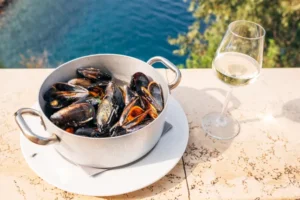
If you’re interested in sampling a few more beverages and you’re willing to travel for the pleasure, a nice day trip is the Škaulj Winery, a half-hour drive away. They do wine tastings paired with lunch and dinner.
Another celebrated culinary tradition is the pairing of lamb and cheese, which comes from the nearby island of Pag.
The Paški sir cheese has been honoured with protected cultural status (Protected Designation of Origin), alongside things like olive oil and Dalmatinska panceta, a form of streaky bacon from the Dalmatia region that’s cured over 65 days.
We’re ready to go for the grub alone.