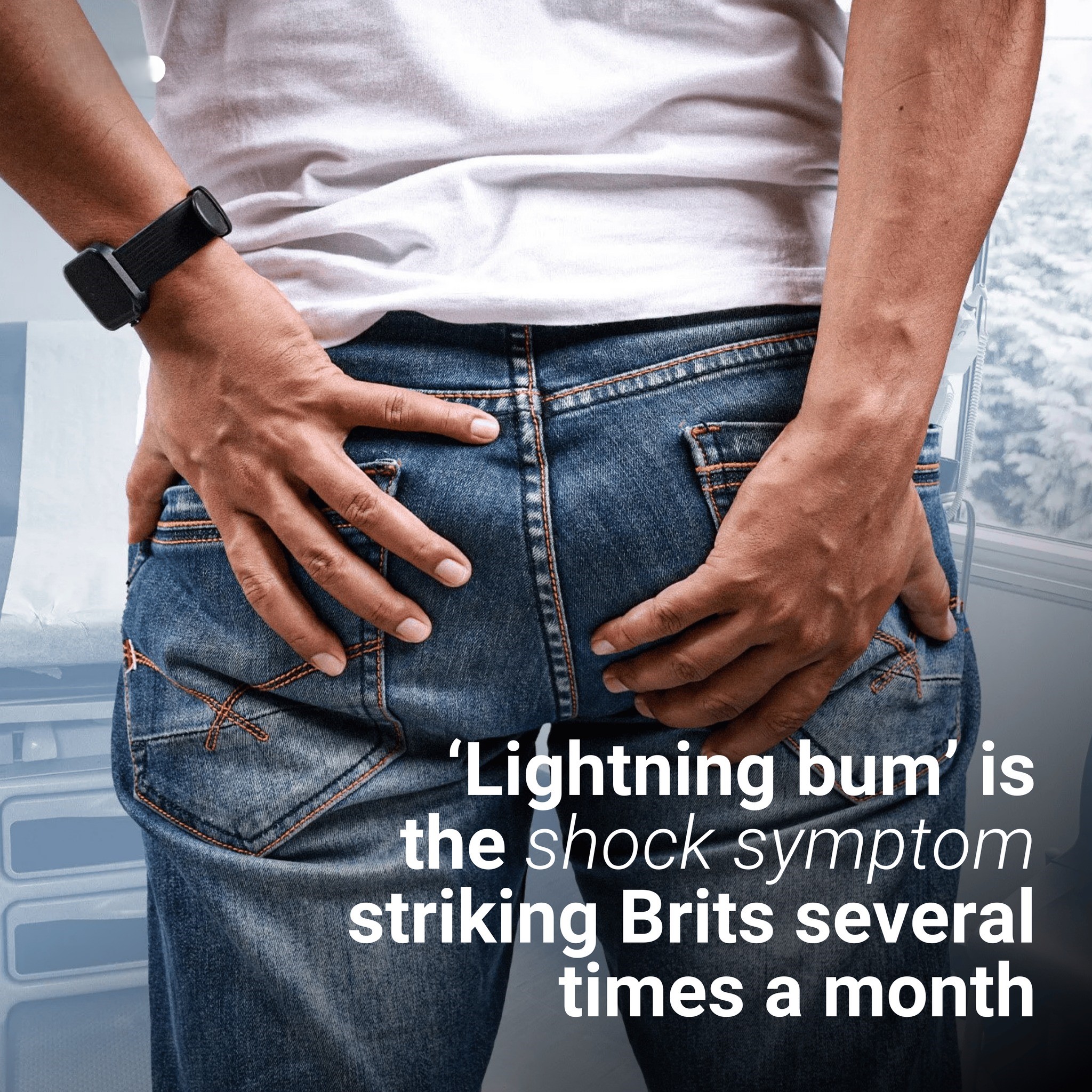

If you’ve been minding your own business and suddenly experienced a sharp zap of pain shooting down into your butt – you aren’t alone.
In fact, you’ve probably just been struck by a medical phenomenon called’lightning bum’.
It’s pretty unpleasant and often elicits a gasp or *ouch* when it rips through us out of nowhere, but before you know it, the pain has vanished without trace.
Well, there’s a reason you experience this, and it could point to something more sinister when it comes to our health, so pay attention…
What is lightning bum?
It’s a colloquial term doctor Hana Patel explains is used to describe a ‘sudden, sharp, electric shock-like pain in and around the rectum’.
‘These sensations often last a few seconds but can definitely be intense enough to stop someone in their tracks,’ the doctor for Superdrug Online Doctor tells Metro.
‘Medically, this type of pain often relates to spasms of the anal or pelvic floor muscles.’

Dr Patel adds it can even feel similar to a muscle cramp but far more abrupt and severe, before fading away.
Now you may also know this pain as ‘lightning crotch’ – a common pregnancy side effect – which refers to the same pain but just in the lower pelvis or vagina. That’s because this pain can radiate into both these areas, as well as the tailbone, rectum, legs, or lower abdomen, according to the GP.
While the number of Brits affected is unclear because it’s such an underreported symptom, for those experiencing this pain it can happen several times per year or month.
Who does lightning bum strike and why?
As if we didn’t have enough on our plates, lightning bum is more often reported in women, rather than men. This doesn’t mean men can’t experience the same symptom, though.
‘It can affect anyone, but due to gynaecological conditions that cause pain to occur in the rectum, and hormonal fluctuations which influence nerve sensitivity in the pelvis, not to mention pregnancy, it’s reported more often by women,’ Dr Patel says.
She adds that while lightning bum isn’t anything to worry about on its own, it could point to a deeper health problem – so it’s best to get it checked out.
Which health issues does lightning bum point to?
There are six main health problems that could be causing these lightning strikes of pain, according to Dr Patel.
The first is proctalgia fugax – a spasm of the anal sphincter muscle that causes sudden rectal pain lasting seconds to minutes. The doctor explains it’s surprisingly common, with up to 18% of people experiencing it at some point, who are typically aged 30 to 60 years old.
It’s not a serious or life-threatening condition, with many people never seeking medical help for it, but there are a few treatments you can try.
‘They focus on muscle relaxation through warm baths, gentle stretching, pelvic floor physiotherapy or, in severe cases, medications that relax the muscles,’ Dr Patel adds.
Endometriosis is another problem lightning bum could point to. ‘This is because it affects structures behind the uterus, including the rectum,’ she explains. ‘When lesions irritate pelvic nerves or nearby tissue, they can trigger sudden, sharp rectal pain, especially around menstruation.’
Pelvic floor spasms can also be responsible for this pain, which involves your muscles contracting involuntarily, and can be treated by physiotherapy. Irritable Bowel Syndrome can also be indicated as a result.
Also, lightning bum could point to Nerve Compression Syndrome, which simply means you have a trapped or squeezed nerve, and a doctor can advise on whether physical therapy will remedy it or surgery or medications would be better suited.
Lastly, those pesky Sexually Transmitted Infections could also be causing this pain.
‘STIs such as gonorrhoea, chlamydia, and herpes can infect the rectum directly, leading to inflammation, nerve irritation, or muscle spasm that may cause sharp pain,’ Dr Patel adds.
More on your health and wellness…
Treating lightning bum
Obviously if your lightning bum is persistent you should see your GP who can identify if one of the above is causing your pain.
But to treat the symptom itself, there are some at-home techniques you can try.
These include warm baths and heat packs, relaxation or breathing techniques, pelvic floor physiotherapy, avoiding constipation and gentle stretching or yoga, according to the doctor.
Just remember, you shouldn’t live in discomfort, and while talking about lightning bum may feel awkward, it could do you the world of good in the long run.