
Melissa, 18, had no idea how to feel when her grandfather died. Most of the time, she wasn’t even sure if she was feeling anything.
The student from north London had never experienced grief before, and she worried that this nothingness was something not ‘normal’.
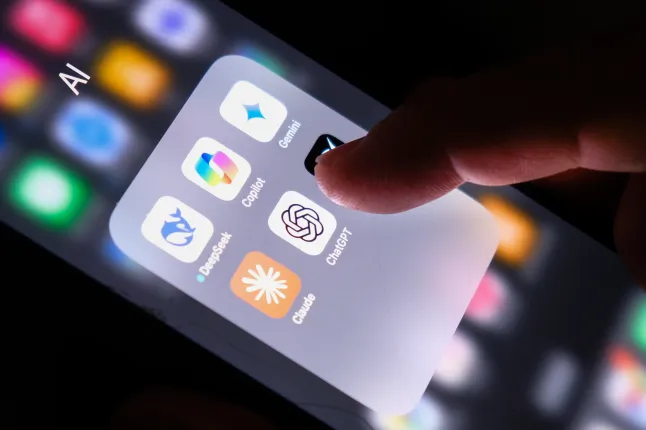
Feeling too awkward to chat with her friends about it, and knowing the wait for a school counsellor could take weeks, she logged onto ChatGPT.
‘I asked Chat if it was normal not to feel anything, or if the feelings come after,’ Melissa told Metro. ‘Chat told me that it was normal and I’m not crazy. I’m not the only one.’
Melissa is among the one in four young people who have turned to AI chatbots for mental health support, according to a new report.
The Youth Endowment Fund (YEF) surveyed 11,000 children aged 13 to 17 in England and Wales.
A quarter of teens reported a diagnosis of at least one mental health or neurodevelopmental condition, such as depression.
A further 21% suspected they had a condition but had not been diagnosed.
‘If I want advice at 2am, ChatGPT is easier’
Melissa says Chat – as she calls ChatGPT – gives her all the mental health support she needs when her partner or friends aren’t around.
‘If I want advice at 2am, it’s easier to go to Chat than wake them up,’ she says. ‘It reduces the awkwardness and pressure of conversations, so you feel more confident as there are no consequences.’
In one conversation, seen by Metro, Chat gave its ‘bestie’ a bullet point summary of ‘what’s really happening’ before giving her a mantra.
Melissa also says she can’t wait up to a month for therapy, as one youth charity asked her to. ‘Chat’, she says, is always around for a quick chat.
‘I was once really close to falling out with one of my good friends, so I went to Chat and said, “I don’t know what to do, can you help me?”‘ she recalls.
‘Chat gave me good advice and it worked – we’re still friends.’
YEF’s findings come as mental health providers continue to buckle under increasing demand and decreasing resources.
Mental well-being has been declining since 2016, with monthly referrals for young people’s mental health tripling from 40,000 to 120,000 last year.
Therapists often see up to 25 clients every week, depending on service and role.

Automated therapy is nothing new – an artificial psychotherapist called Eliza was built in 1967 by MIT researchers. Clients could punch in their thoughts onto a computer and Eliza would ask them to elaborate further.
Supporters say that generative AI could analyse conversations between therapists and their patients so they learn to behave the same way.
The hope is that these bots could be used to offer therapy to locations where care is not as readily available, such as rural communities.
But critics warn that unregulated AI tools can exacerbate mental health conditions and point people in troubling directions.
British Psychological Society spokesperson Dr Michael Swift wasn’t surprised by YEF’s findings. Gen Z may have grown up with tech, but they’re still teenagers at the end of the day.
‘Adolescents are sensitive to perceived criticism, rejection and authority and AI offers a non-reactive, endlessly patient listener that never appears bored or disappointed,’ Dr Swift tells Metro.
 ‘So of course, they’re going to go to something that accepts them and doesn’t judge them.’
This was Melissa’s thinking, too.
She recently encouraged her partner to use the bot for advice when she’s not around – but she doesn’t need to do that for her friends.
‘If I were to line up my friends and tell them, open their phone, I promise you,’ Melissa says, ‘every single one has ChatGPT.’