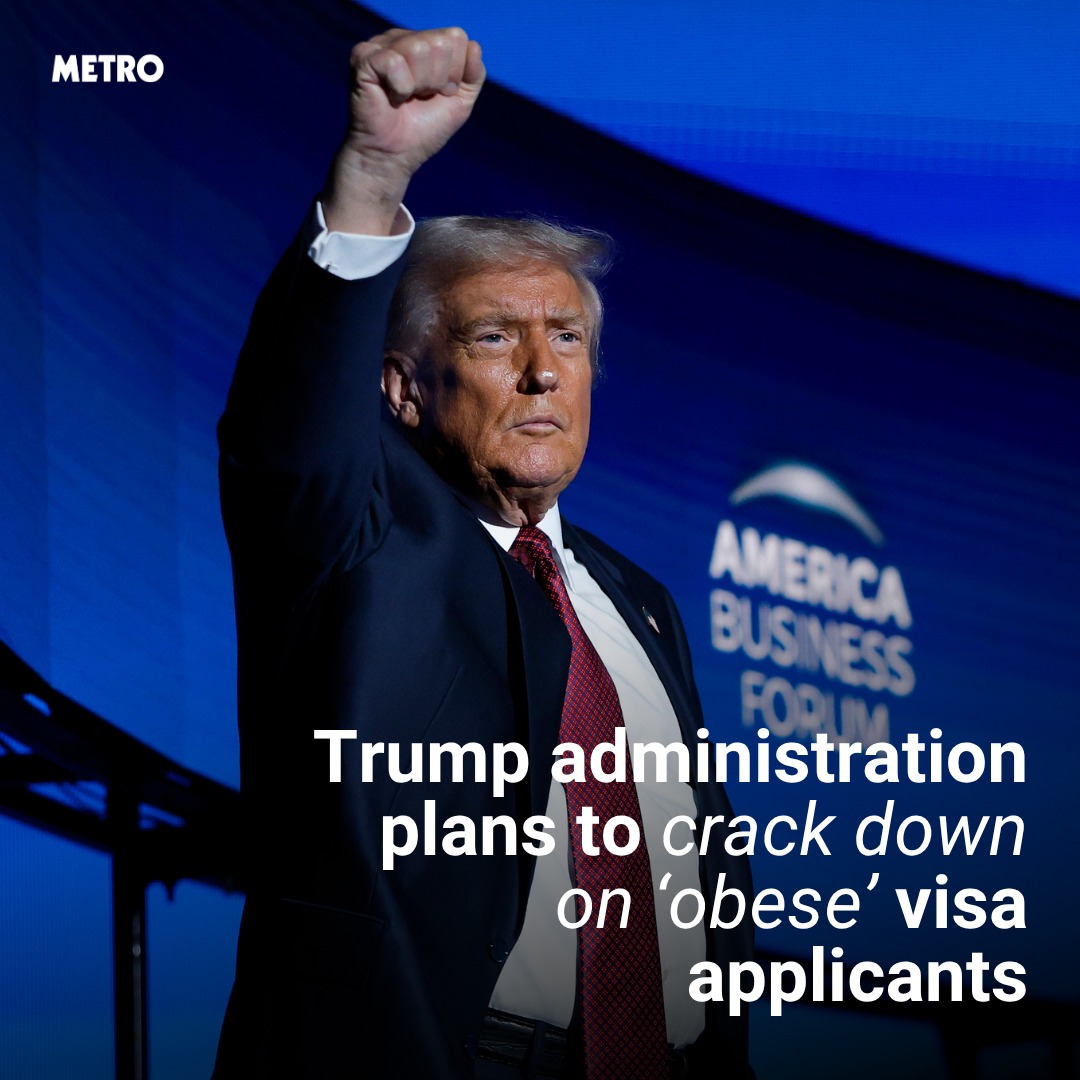

After raising the bar for skilled foreign worker visas, the Trump administration is setting its sights on another ‘problem’ – obese applicants.
There are reports that U.S. consulates are being advised to deny visas to applicants who are overweight and unable to cover their medical costs.
Other conditions listed in the guidance include obesity, high blood pressure, diabetes, sleep apnea, cancers, cardiovascular and respiratory diseases, and some neurological disorders.
The guidance specifies that the rejections will be for those who may be eligible for public benefits, which some argue is a burden on American taxpayers.
The order reads: ‘You must consider an applicant’s health. Certain medical conditions can require hundreds of thousands of dollars’ worth of care.’
Ironically, the news came on the same day that Trump announced cuts in the cost of weight-loss jabs in the Oval Office.
Spokesman Tommy Pigott said in a statement: ‘It’s no secret the Trump administration is putting the interests of the American people first.
‘This includes enforcing policies that ensure our immigration system is not a burden on the American taxpayer.’
According to the National Institutes of Health, adults with obesity in the US saw annual medical care costs of an additional $2,500.
Trump is hoping to reduce taxpayer costs to treat those who could seek treatment for obesity through public assistance while on a visa.
Earlier this year, the President signed an executive order establishing the ‘Trump Gold Card’ program, and setting the price tag at a whopping $1million.
The card can allow wealthy foreigners to buy residency in the US, but those on H1-B visas are worried as visa restrictions become even more strict.
The controversial programme will affect many work visas, including the popular H1-B visa used by 500,000 people.
For companies that want to speed up the new visa process for an employee, the cost will be $2million.