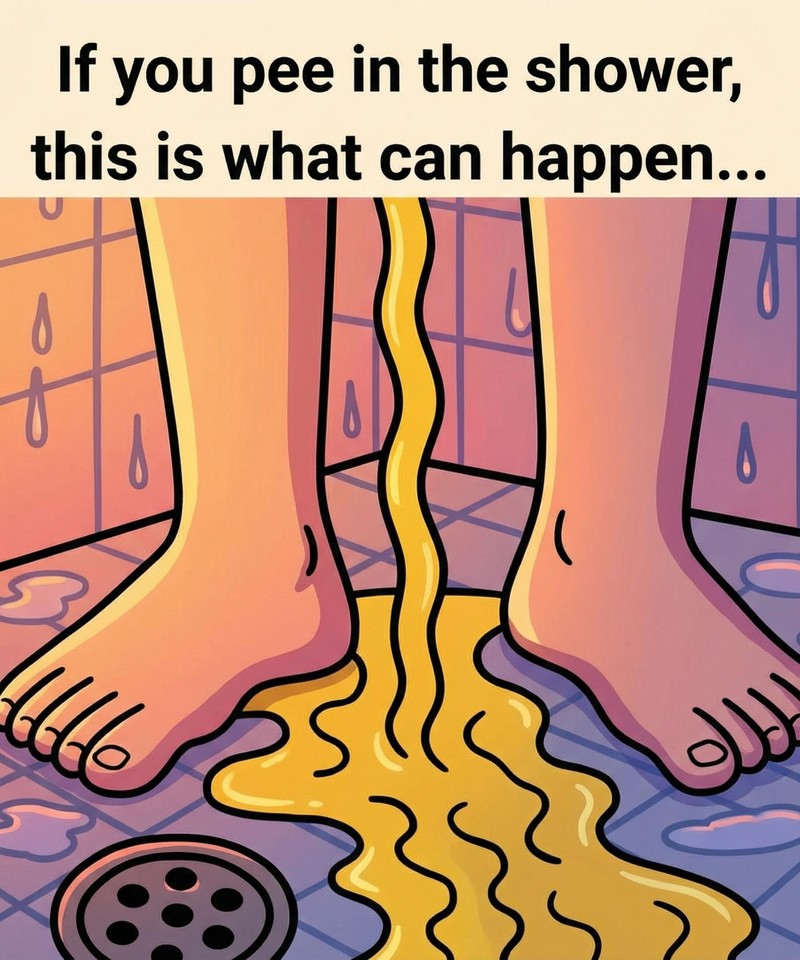
Peeing in the shower is a habit that many admit to privately while others view it with significant distaste. From a medical standpoint, urine from a healthy individual is mostly sterile when it leaves the body, meaning that occasional occurrences in a private home are generally considered low-risk. However, experts caution that “mostly sterile” does not equate to “completely clean.” Bathrooms are notoriously ideal breeding grounds for bacteria—being warm, damp, and enclosed—and urine residue can easily cling to porous grout, drains, and shower floors. While the risk is minimal in your own space, hygiene experts strongly advise against the practice in shared or public showers, where the potential for cross-contamination and the spread of various pathogens increases significantly.
Beyond simple hygiene, urologists raise concerns regarding a psychological phenomenon known as Pavlovian conditioning. By frequently urinating while water is running, your brain can subconsciously form a powerful association between the sound of a faucet and the urge to empty your bladder. Over time, this conditioning may lead to bladder urgency issues, where hearing a running tap, rain, or even washing the dishes triggers an immediate and uncontrollable need to go. This behavioral side effect is often overlooked but can become a persistent problem for those who struggle with bladder control or overactive bladders, effectively training the body to react to environmental cues rather than physiological signals.
There are also specific physiological risks and persistent myths associated with this habit. For women, standing to urinate—rather than sitting in the anatomically preferred position—can prevent the complete emptying of the bladder, potentially leading to pelvic floor strain or an increased risk of urinary tract infections (UTIs). Additionally, the common belief that urine “cleans” the shower due to its ammonia content is a total myth. In reality, urine is far too diluted to act as a disinfectant and can actually contribute to lingering odors and mineral buildup over time. Proper sanitary cleaners remain the only effective way to maintain a hygienic shower environment.
Ultimately, while peeing in the shower is unlikely to cause a medical emergency for a healthy adult in a private setting, it is a habit that carries hidden consequences. The combination of potential bladder dysfunction, bathroom odors, and infection risks suggests that the toilet remains the superior choice for waste disposal. If you have open cuts on your feet, are currently battling a UTI, or are using a shared facility, the practice should be avoided entirely to protect both yourself and others. Maintaining a clear boundary between where you wash and where you go is the simplest way to ensure your long-term pelvic health and household hygiene.