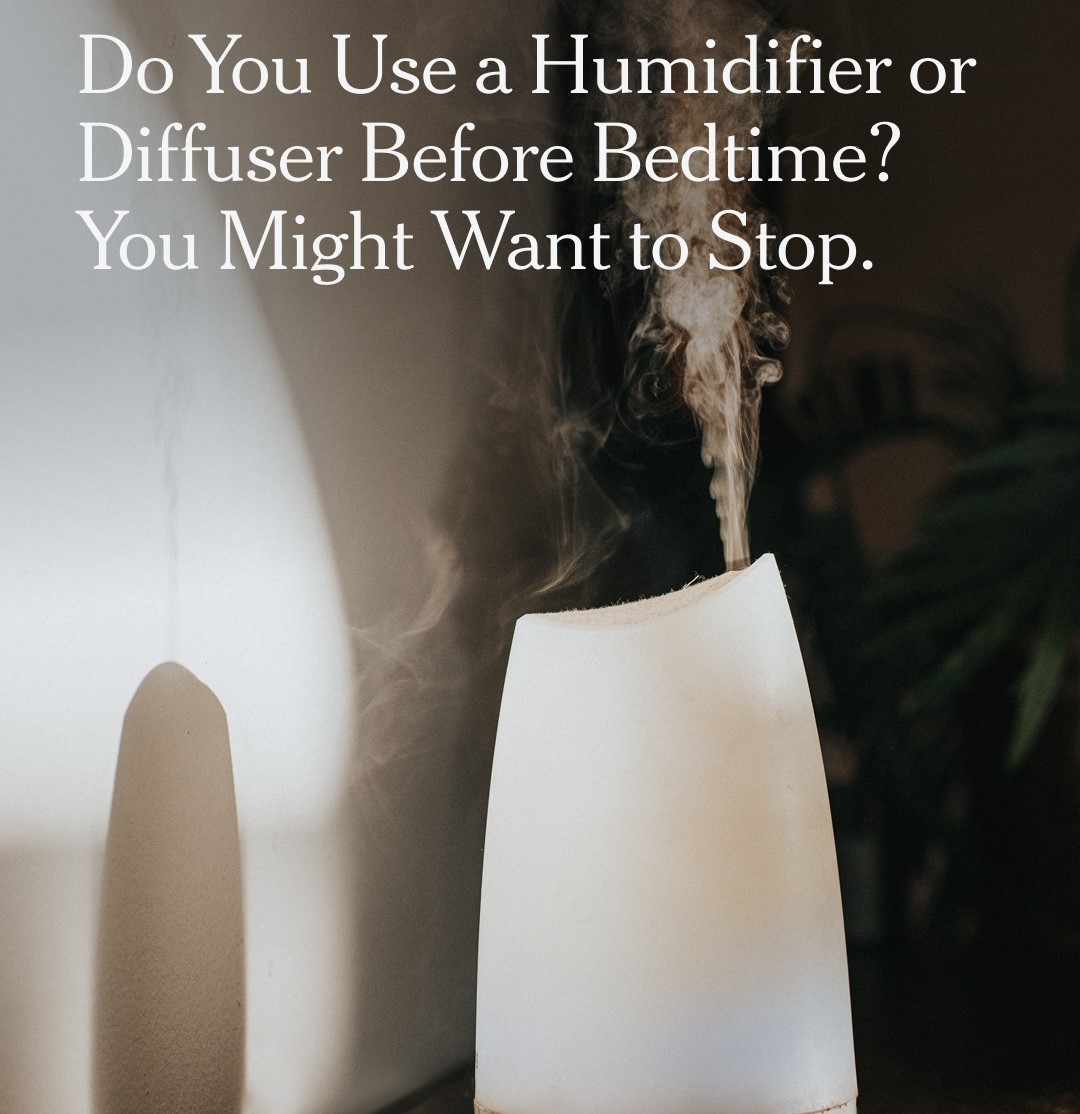
That scent diffuser is now bound for my local electronics-recycling center. I’ve had asthma since I was a kid, and I’m Wirecutter’s sustainability editor, which means I’m often thinking about indoor air quality—so I found it unsettling that my air purifier revved into high gear whenever I used it, even though the room smelled wonderful. I suspected that those oil and water droplets might affect my lungs, now and over time. After I did some research, my suspicions were confirmed: Those oils and water droplets weren’t doing my asthmatic lungs any favors.
Here’s why I retired my oil diffuser and my humidifier, and why you might want to consider doing the same.
How to use humidifiers and diffusers safely
A humidifier can be a useful tool to support health, said Juanita Mora, a physician and spokesperson for the American Lung Association. “But we also have to make sure that it’s cleaned at least once a week [and] the water’s changed daily so that we avoid adding more indoor pollutants to our environment by turning on this humidifier,” explained Mora.
Wash humidifiers with soap weekly
Staff writer Thom Dunn, who wrote Wirecutter’s guide to the best humidifiers, recommends cleaning the device weekly or any time you notice white scale or film, as well as after pulling it from storage. (That’s why cleaning was a big part of testing humidifiers for our guide.)
Seriously: Do it once a week. This is no laughing matter; the Consumer Product Safety Commission issued an alert about dirty humidifiers and possible health hazards, which can range from “flu-like symptoms to serious infection.”
We have a whole article about cleaning humidifiers, but soap and water is the safest option, said Maryum Merchant, a pulmonologist at UCLA Health who co-leads the Adult Asthma Program, in a phone interview. She said diluted white vinegar can also be used safely, but she discouraged the use of bleach, even when diluted.
The CDC states that soap and water are typically sufficient to clean surfaces. If you do use bleach to clean a particularly nasty humidifier, Thom recommends bringing the humidifier outside and running a full tank of water through it after you’ve finished cleaning, to make sure none of the dangerous chemicals stick around.
“Do not use chemical cleaning agents or disinfectants, as they can remain in the humidifier and be volatilized next time the humidifier is used,” said Andrea Dietrich, a professor of civil and environmental engineering at Virginia Tech who co-authored a paper on humidifier use and indoor air quality.
Use distilled water and change it daily
The CPSC recommends changing the water in your humidifier once a day. On top of that, as Merchant, Mora, and other experts recommend, you should use distilled water—that is, water without any minerals—in an ultrasonic humidifier. Distilled water excludes tap water, even when it’s been filtered or purified.
That’s because studies show that when filled with mineral water or tap water, even when it’s been filtered, ultrasonic humidifiers in particular can send small particles of dried minerals, like calcium and magnesium, into the air. Those minerals aren’t inherently harmful (in fact, they’re important nutrients), but they’re not healthy when inhaled into the lungs.
“When dried mineral particles containing calcium and magnesium are inhaled into the lungs, this is not good for health, as particles can clog the lung passages, making breathing difficult,” said Dietrich, who co-authored one such study, by email. There is also a risk that the mineral dust could contain metals like arsenic, cadmium, lead, and manganese, she said.
“Inhaling particles has worse consequences for children than adults because children inhale a greater volume of air per body weight than adults,” Dietrich said.
In contrast to ultrasonic humidifiers, steam or evaporative humidifiers circumvent the possibility of aerosolizing minerals—but steam types can pose burn hazards and may not be a good idea if you have young children or pets. And they too need to be cleaned routinely.
Monitor moisture
“Depending on your home, raising the humidity in a room can also lead to growth of microbes,” said Hayley Goldbach, a dermatologist and dermatologic surgeon at Brown University, in an email. “For someone with asthma, this can be a serious trigger.”
Generally speaking, optimal humidity levels for your home are between 30% and 50%, said Mora.
The EPA recommends keeping humidity levels indoors within 50%. If you do use a humidifier regularly, it’s a good idea to monitor your indoor humidity, said Mora; devices that measure this, called hygrometers, are available at hardware stores (we suggest an inexpensive option in our dehumidifier guide).
You should also take care to keep the area around the humidifier dry, including walls and other vertical surfaces, to prevent mold and mildew growth within building materials, said Jeffrey Siegel, a professor of civil and mineral engineering at the University of Toronto, in a phone interview.
Be cautious with scents
If you’re in the habit of running your humidifier with essential oils (which some models let you do) or using an essential oil diffuser that relies on mist, here are some things you may want to consider.
Research on the possible benefits of essential oils is ongoing. But when it comes to scent diffusers, you should proceed with extra caution: Aromatherapy essential oils aren’t regulated by the Food and Drug Administration or the CPSC. Essential oils may emit potentially hazardous VOCs into the air. Experts say you should never use essential oil diffusers around infants under 6 months old; for ages above that, discuss with your doctor what essential oils may be okay to use.
How much you put into your diffuser, and how much you dilute it, will vary and is hard to measure. And if your space is poorly ventilated (a small bedroom with the windows closed in winter, say), the concentration of oils in the air you breathe can climb quite high, said Merchant.
People are still studying the safety of inhaling essential oils long-term. However, one study suggests that heavy exposure, as in several hours a day over many years, could potentially have health effects. More immediately, essential oils might trigger an asthma attack in some individuals, according to the American Lung Association. If you have asthma, it’s a good idea to proceed with caution, as we suggest in our guide to the best essential oil diffusers.
Remember, if you use an essential oil diffuser, clean it regularly, fill it with distilled water, and don’t keep it running on your bedside table as you fall asleep. Let it run for as short a time as possible, and far from your head.
Essential oils can also be hazardous to pets or otherwise impact their health, said Amy Nichelason, a veterinarian and professor of veterinary medicine at the University of Wisconsin-Madison, in an email. “Overall, I don’t recommend essential oil diffusers, especially in environments where my patients”—that is, dogs and cats—“have any form of respiratory disease like asthma,” she explained. She recommends using them only in areas that your pet can’t access.
How to pamper yourself at bedtime instead
If all this humidifier upkeep and essential oil uncertainty seems stressful to you, keep in mind that you have plenty of other ways to bring a little extra TLC to your wind-down routine and support your well-being in the process.
Moisturize your skin. People often turn to humidifiers in hopes that they’ll moisturize skin. Instead, Goldbach suggests using an unscented moisturizer, especially a cream or ointment. Wirecutter recommends a few lotion moisturizers that are widely available at most drugstores.
Take a shower. A warm, steamy shower can provide some of the same benefits as a humidifier, said Goldbach, without risking mold growth in your bedroom.
Brew a cup of steam. “For a dry itchy throat or a head cold: even a nice steamy cup or bowl of water with a towel over your head can be helpful,” said Goldbach. For an aromatic bedtime ritual, you might also hover over a cup of herbal tea, something that I used to do as a kid with asthma; the steam helped loosen mucus and open up my lungs.
Consider a nasal rinse or saline spray. If you feel dry or congested, or if you have seasonal allergies, Merchant recommends a nasal rinse or spray to help hydrate and decongest nasal passages. Combining this in the evening with other regular routines, such as brushing your teeth, might help you support the habit.
Use targeted home fragrances sparingly. If you long for a calming scent, consider a light linen mist (misting it away from your pillow, letting it settle, and then getting into bed) or a scented lotion or balm (I like the lavender-scented Badger Sleep Balm, which I wrote about previously). These items can give you a scent cue for bedtime without barraging your airways with essential oils as you sleep. However, essential oils in these products might cause skin irritation, so do a patch test first.
Maybe go for a scented candle. Mora said she tells patients with underlying respiratory conditions such as asthma, COPD, and emphysema to limit candle use to an hour. “You’re really breathing all these particles in.”
That said, Merchant told me that between an essential oil diffuser and a scented candle, she would choose a candle, especially in a well-ventilated space, since it can be burned for a brief amount of time and is seldom left burning for hours after bedtime (can you say fire hazard?). A diffuser, by contrast, might be placed near your head or in a closed room. (If you’re interested, see some of our favorite scented candles.)