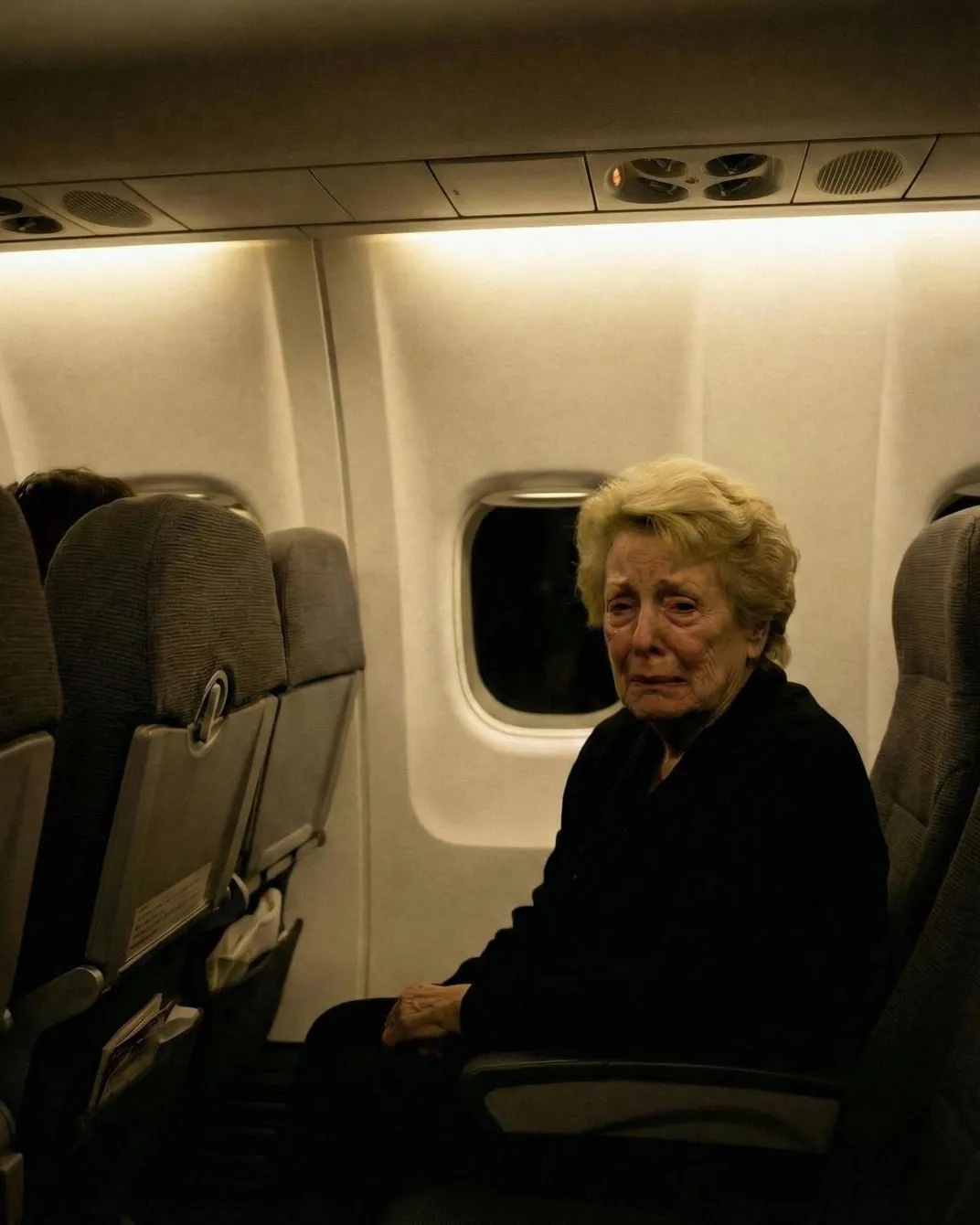
Margaret was sixty three when she boarded the flight to Montana with grief sitting so heavily in her chest it felt like it had weight of its own. Her husband sat beside her in a silence that was not anger but exhaustion, the kind that comes when a goodbye is waiting at the other end of a journey. She buckled in, closed her eyes, and tried to become small enough to make it through the hours ahead. Then the captain spoke, steady and calm, and something inside her jolted awake because the voice felt impossibly familiar. She had not heard it in forty years, but it reached straight through time and touched a memory she thought she had sealed shut, and for the first time all day she forgot to brace for pain.
In her mind she was twenty three again in Detroit, standing in a worn classroom trying to teach literature while quietly teaching survival too. Among her students there was one boy who always stood apart, Eli, quiet, polite, and gifted with his hands in a way that made broken things look fixable. Life had been rough on him, and Margaret did what she could in small hidden ways, an extra snack, spare pencils, kindness that did not demand anything in return. Then came the night a misunderstanding put him in trouble he did not deserve, and she spoke up when no one else would, knowing it could cost her but choosing him anyway. Not long after, Eli moved away, leaving behind a single daisy and a promise that one day he would make her proud, and she carried that moment for decades without ever knowing where his life had landed.
When the plane arrived, Margaret waited near the cockpit as passengers filed out, her heart beating too fast for a body already tired from sorrow. The door opened and there he was, older now, taller, in a captain’s uniform, but with the same eyes that once searched her classroom for a reason to hope. For a breath they just stared, disbelief holding them still, and then laughter broke through first and tears followed close behind. Eli thanked her for believing in him at the moment when it mattered most, and Margaret felt her grief shift, not disappear, but loosen, as if kindness had quietly returned to her with proof that it had not been wasted. She told him he had become his own promise, and the words steadied her like a hand on her back, reminding her that the good we plant can live long after we stop watching it grow.
Days later Eli showed her the life he had built, including a small hangar and a bright yellow plane connected to a nonprofit he founded to fly children from remote towns to get the medical care they needed. He explained it simply, that he wanted to pass forward what he had been given, not money or luck, but someone who stood up for him when the world was ready to label him and move on. He handed Margaret a worn photograph of her younger self with a message on the back meant only for her, and she cried again, but this time the tears were lighter because they carried gratitude alongside the ache. When she met Eli’s young son Noah, he hugged her as if she belonged, and over cupcakes and gentle laughter Margaret felt something new take root beside her grief, connection, purpose, and a love that did not replace what she had lost but made room for her to keep living. In the years that followed, drawings began arriving signed To Grandma Margaret, and she understood that life had circled back with a quiet mercy, proving that even after loss, the heart can still find new wings