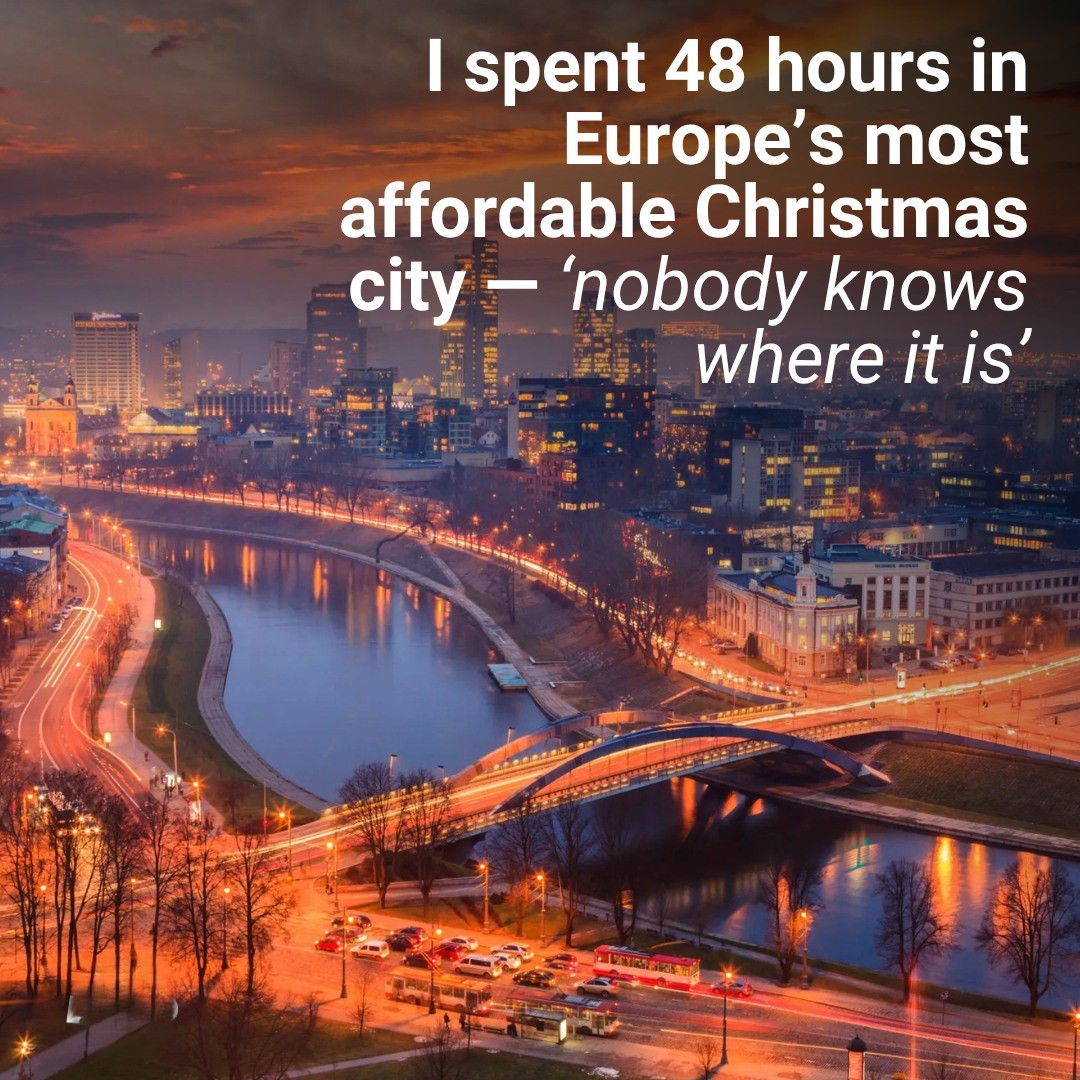
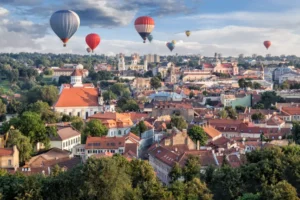
Winding cobbled alleyways. A bohemian quarter with Baroque architecture. Michelin-starred restaurants and moodily lit jazz bars. It sounds like Paris, but this is what awaits visitors in Vilnius, Lithuania’s pocket-sized and underexplored capital.
The tourism board is willing to laugh at its obscurity, declaring the country the ‘G-spot of Europe’ — ‘amazing, but nobody knows where it is’.
Beyond the city’s 700-year-old walls is a charming town still reckoning with its complex past, where brutalist Soviet architecture meets high-end boutiques and a rapidly blossoming food scene.
It’s been more than 30 years since Lithuania gained independence from the USSR, but the buzz of freedom is still in the air. And, drawn by vibey nightlife, dark history and reasonable prices, travellers are starting to take note.
Vilnius has just been named this winter’s top spot for a bargain Christmas break. The city was found to have the lowest price for a two-night trip for two people out of 15 European destinations, analysed by Post Office Travel Money.
Taking into account costs such as return flights, bed and breakfast, accommodation, meals and refreshments bought at markets, the total cost for a stay in Vilnius was just £509 for two people.
It’s a steal when you compare it to the likes of Berlin (£691.85), Prague (£901.25), or Copenhagen, the most expensive on the list, which will set a pair back £1,056.55.
Happiness found
I’ve barely begun my two-night trip when I am struck by how peaceful Vilnius is. Compared to the heaving Tube carriages of central London, the silence of the streets is like a warm hug, despite the November chill.
Only 5% of Brits know more than the name and approximate location of the Lithuanian capital, according to a 2019 survey, and there’s a distinct lack of the British accents you hear in steady streams on the streets of Prague or Amsterdam.
The city is convenient and exceptionally cheap, with an airport just 15 minutes’ drive from the Unesco-listed Old Town and tourist staples like bottles of local beer for £2.75 (€3.20).
Arriving late in the evening, I head straight for 14 Horses, a farm-to-table restaurant serving up lamb dumplings, grilled eel on sourdough and potato pancakes with sweetbread (four courses for €55 per person). Another must-visit is Dziaugsmas, one of four local restaurants to receive a coveted star in this year’s first-ever Michelin guide to Lithuania (try the black pudding doughnuts and bone marrow from the €67 tasting menu).
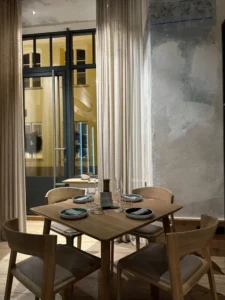
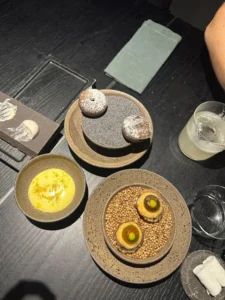
Outside, the city feels incredibly safe, to the point that I leave my bag and coat unattended on a stand by the door in Nick & Nora, one of Vilnius’ best cocktail bars that does an excellent quince gin (€11).
Cheap, safe and up for a laugh; little wonder why Lithuania took the top spot in this year’s World Happiness rankings for the under-30s — the best place in the world to be young.
The republic of free spirits
On a riverbank near the old town is Uzupis, a free-spirited neighbourhood that declared itself a republic in 1997. Our tour guide, Lina Dusevičienė, tells us that the district was a no-go area during Soviet times, when its beautiful buildings were used as squats by creatives deemed ‘undesirable’ by the Communist regime.
The main thoroughfare was once nicknamed the ‘Street of Death’ due to high crime rates and the district’s Jewish population, which was decimated in the Holocaust. But life has returned. ‘It was here that people turned [when the Soviet Union fell],’ says Lina. ‘People had always been themselves here. They helped others to become individuals again.’
Uzupis is home to an eclectic group of writers, artists and musicians, with a constitution that captures the essence of the neighbourhood’s wacky but well-meaning ideals. Some of the more bizarre clauses include ‘a dog has the right to be a dog’, and ‘everyone has the right to understand’ (followed by ‘everyone has the right to understand nothing’). The charter is printed in more than 30 languages on mirrored rectangles on Paupio Street, right around the corner from parliament house — which also functions as a cafe-cum-pub. I sveikatą (cheers) to that.
I stop to refuel at Momo’s Grill, a cosy lunch spot that serves beef tartare (€15) and classic Lithuanian fare such as pickled onion and beetroot soup (€7), the national dish which now has an annual festival in its honour.
Outside, stalls for the Christmas market are being assembled. It’s too early to experience the magic, but festive tourists are sure to descend on Vilnius very soon.
‘We are Baltic’
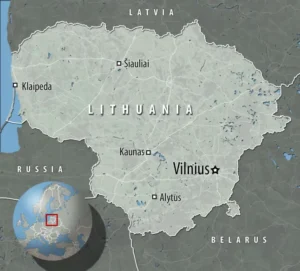
Home to around 2.8 million people, Lithuania – the largest and most southerly of the three Baltic states – sits on the eastern shore of the Baltic Sea, bordered by Latvia, Belarus, Poland and the Russian region of Kaliningrad.
Lithuania declared independence in March 1990, the first former Soviet country to do so, a move that prompted a full-throated embrace of its own ideals.
‘We are Baltic, not Russian, not eastern European,’ Lina explains. ‘We are proud of our heritage, and we want people to know about it.’
Where to stay in Vilnius
Vilnius has a smorgasbord of affordable accommodation, and it’s hard to look past the Comfort Hotel LT – Rock ‘n’ Roll, TripAdvisor’s top rated for value with rooms in December from £67.17 per night.
For luxury, head to Hotel Pacai, a stylish hotel inside a Baroque palace where Napoleon Bonaparte once stayed. The 104 rooms feature glossy marble bathrooms, centuries-old exposed brickwork and beds so comfortable you won’t want to get up. But the real draw is the location, on what was once Vilnius’ ‘royal mile’. Step out of the cobbled courtyard and you’re right beside the old town, minutes from the city’s finest restaurants, boutiques and landmarks. Double rooms with breakfast start in December from £173.22 per night.
In 2019, the prestigious Cato Institute published an article titled ‘How Lithuania destroyed the Soviet Union’, and it’s true that the country’s national pride played a key role in the collapse of communism.
These dark days are detailed in the Museum of Occupations and Freedom Fights (£5/€6), an incredible archive of KGB brutality which was used as a filming location for the hit HBO miniseries Chernobyl. A harrowing but worthwhile glimpse into the most repressive parts of the country’s history, I spent 90 minutes here — but you could stay and learn for a lot longer.
Today, an enduring belief in the right to self-determination explains Lithuania’s fierce solidarity with Ukraine. Support is evident on every street corner, with Lithuanian and Ukrainian flags flying side by side and ‘Slava Ukraini!’ (Glory to Ukraine) banners in most shop windows.