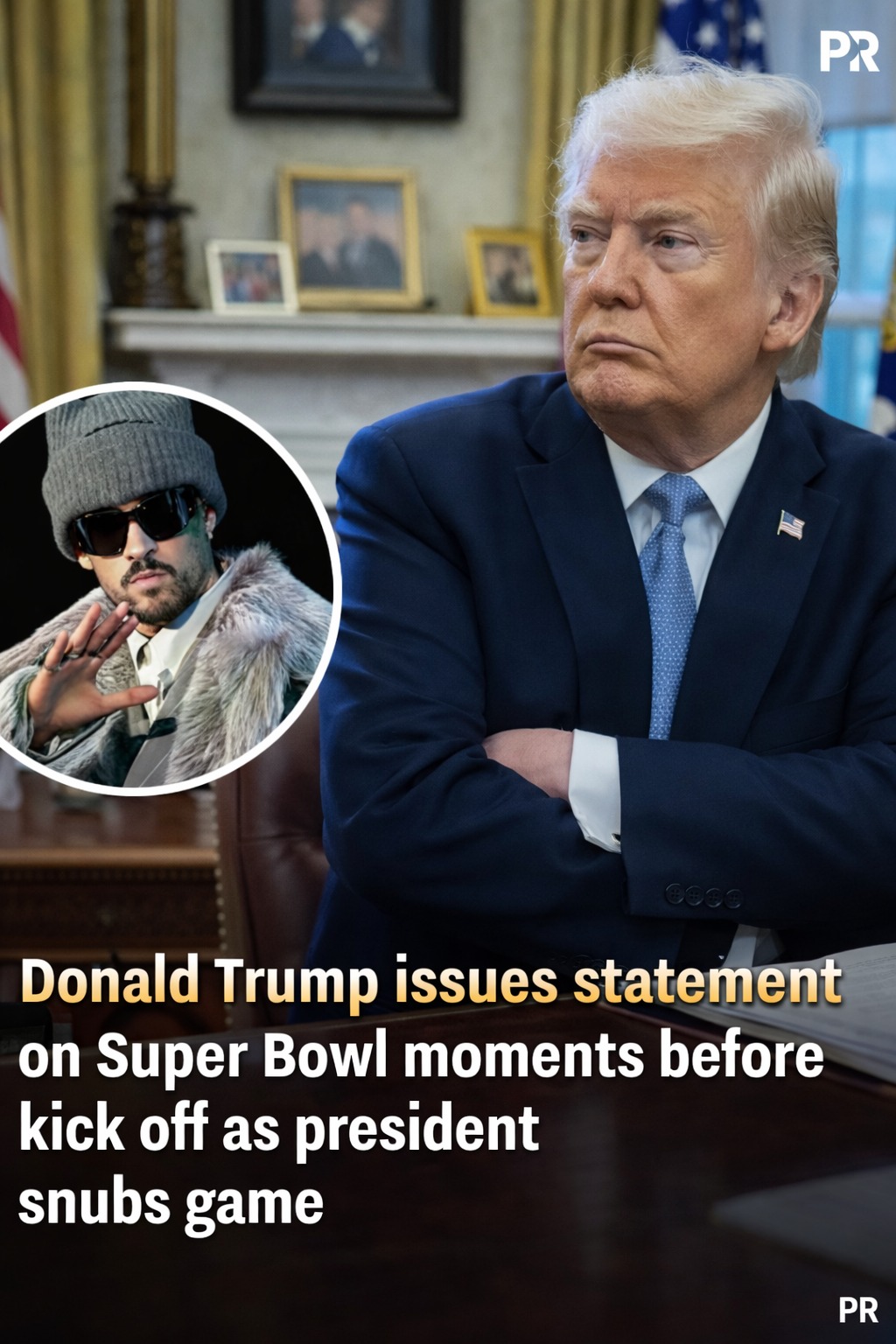
Donald Trump broke his Super Bowl silence after the spectacle was already underway. As Levi’s Stadium buzzed with noise, fireworks residue, and pregame energy, the former president remained hundreds of miles away, choosing not to attend the game in person.
Instead of appearing in a VIP suite or on the field, Trump stayed home and posted on Truth Social just as kickoff excitement peaked. His message was upbeat and familiar in tone, celebrating America’s strength and hinting that “the best is yet to come.”
His absence stood out. Traditionally, presidents attend the Super Bowl as a symbolic, bipartisan gesture. Trump declined, telling reporters the trip was “too far,” a comment that raised eyebrows given his frequent cross-country travel.
He also criticized the halftime entertainment, calling the performers a “terrible choice” and singling out Bad Bunny. The remarks drew backlash, especially given the cultural significance of the Spanish-language artist’s headline performance.
Earlier in the day, Trump fueled speculation with a teaser video from the White House. He praised both teams and quarterbacks, then hinted at making a prediction—only for the video to cut to black without revealing his pick.
Social media reacted instantly, accusing him of baiting viewers for attention. Some found it annoying, others oddly compelling. Analysts suggested the vagueness was strategic, keeping him in the conversation without alienating fans.
The game itself carried major narrative weight. The Patriots returned to the Super Bowl after years of decline, rebuilt through massive spending and new leadership, while the Seahawks entered as disciplined, defensive favorites.
In the end, Trump’s posts didn’t affect the outcome on the field. But they reinforced how the Super Bowl has become more than football—a cultural mirror where politics, celebrity, and spectacle collide, even when the president isn’t in the stadium.