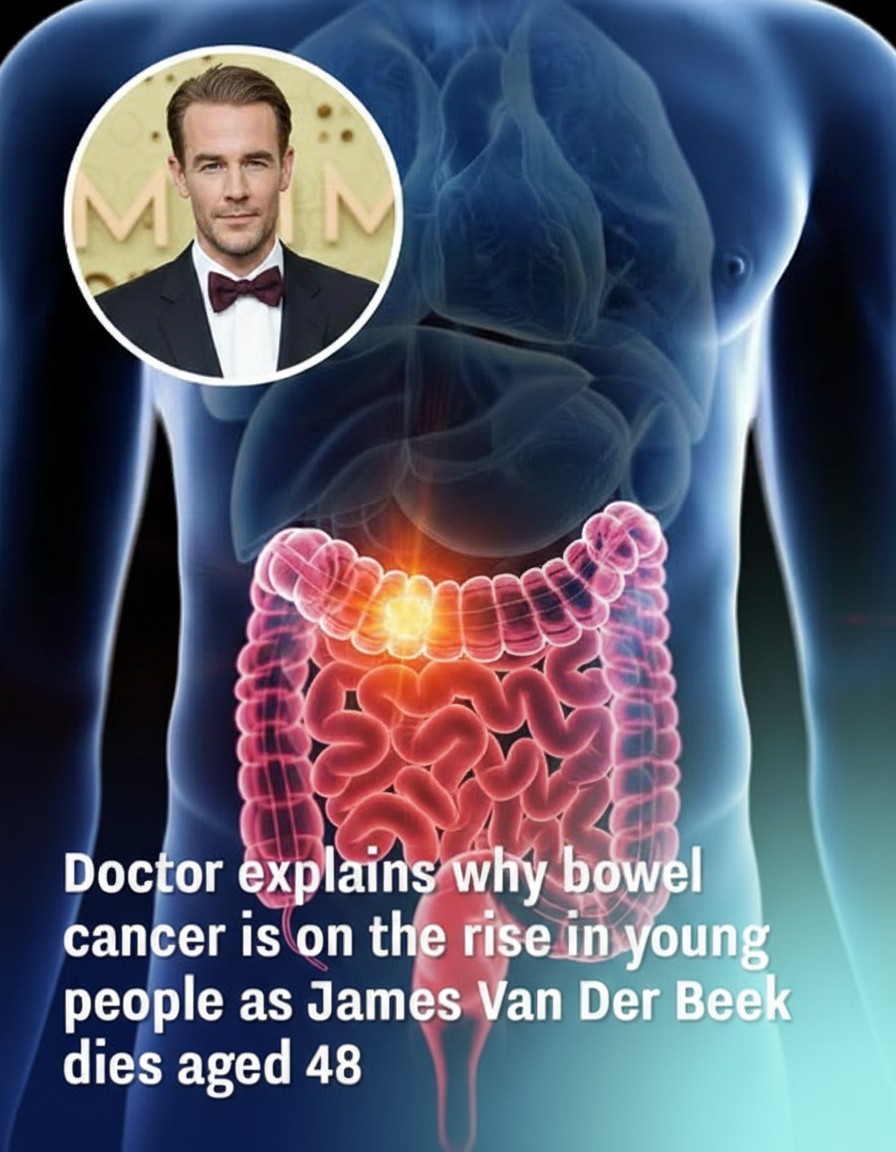
The recent death of James Van Der Beek has brought renewed attention to the continuing rise in bowel cancer cases, particularly among younger adults. Best known for his role in Dawson’s Creek, the actor passed away at 48 after being diagnosed with stage three colorectal cancer in 2024. His family said he faced his final days with “courage, faith, and grace,” while tributes from co-stars, including Katie Holmes, poured in following the news.
Van Der Beek reportedly discovered something was wrong after noticing a change in bowel habits, despite being in good physical shape and living what he described as a healthy lifestyle. Other warning signs of bowel cancer can include blood in stools, abdominal pain, unexplained weight loss, extreme fatigue, and unusual lumps in the stomach or rectal area. Doctors stress that anyone experiencing symptoms should consult their GP promptly, as early detection significantly improves survival rates.
Dr Jamie Murphy has highlighted several possible factors contributing to the rise in cases. While experts do not yet know the exact cause of the increase, obesity is considered a major risk factor due to its links with chronic inflammation, insulin resistance, and changes in gut bacteria. Diet may also play a role, particularly meals high in processed foods and red meat and low in fibre.
The recent death of James Van Der Beek has brought renewed attention to the continuing rise in bowel cancer cases, particularly among younger adults. Best known for his role in Dawson’s Creek, the actor passed away at 48 after being diagnosed with stage three colorectal cancer in 2024. His family said he faced his final days with “courage, faith, and grace,” while tributes from co-stars, including Katie Holmes, poured in following the news.
Van Der Beek reportedly discovered something was wrong after noticing a change in bowel habits, despite being in good physical shape and living what he described as a healthy lifestyle. Other warning signs of bowel cancer can include blood in stools, abdominal pain, unexplained weight loss, extreme fatigue, and unusual lumps in the stomach or rectal area. Doctors stress that anyone experiencing symptoms should consult their GP promptly, as early detection significantly improves survival rates.
Dr Jamie Murphy has highlighted several possible factors contributing to the rise in cases. While experts do not yet know the exact cause of the increase, obesity is considered a major risk factor due to its links with chronic inflammation, insulin resistance, and changes in gut bacteria. Diet may also play a role, particularly meals high in processed foods and red meat and low in fibre.