In early 2026, a dramatic series of military events in the Middle East captured global attention. Reports emerged that a U.S. helicopter base in Kuwait was hit by missiles and drones, following Iran’s “big attack” on U.S. military installations in Bahrain and other Gulf states. These developments are part of a broader escalation in a conflict that began with coordinated U.S. and Israeli strikes on Iran, and quickly grew into a major regional military crisis affecting multiple countries and global interests.
Understanding what happened — and why — requires looking beyond headlines. This comprehensive article explains how the conflict started, what these attacks mean for regional and global security, who the key players are, and how nations, military forces, and civilians have reacted to the rapidly evolving situation.
How the Conflict Started: A Turning Point in February 2026
The current Middle East conflict traces its origins to 28 February 2026, when the United States and Israel launched a series of coordinated air and missile strikes on Iranian territory. According to official statements, these strikes targeted military infrastructure, missile facilities, and alleged leadership targets inside Iran as part of an effort to counter what U.S. and Israeli leaders described as an ongoing threat stemming from Tehran’s nuclear ambitions and support for proxy groups in the region.
This action marked a major escalation between long‑time adversaries in the Middle East. Iran, which had previously weathered decades of tension and intermittent hostilities with the U.S. and its allies, interpreted the attack as a direct assault on its sovereignty and military capabilities. Within hours, Tehran responded with a wave of missiles and drones aimed at U.S. military installations, allied facilities, and strategic infrastructure across the Gulf region.
The conflict — which observers and analysts have begun referring to as the **2026 Iran war — quickly spread from intermittent tensions into a more sustained confrontation that enveloped several countries, militaries, and civilian populations.
Why Kuwait and Bahrain Became Targets
The Gulf region hosts a network of U.S. military bases, logistics hubs, and allied facilities that have long been part of American strategic military posture. These locations support training missions, rapid response operations, maritime security, and intelligence activities that span from the Red Sea to Central Asia.
Two of the most prominent centers involved in the recent strikes are:
 Bahrain – Headquarters of the U.S. Fifth Fleet
The U.S. Navy’s Fifth Fleet, headquartered in Manama, Bahrain, is a central command point for American naval forces operating throughout the Gulf and adjacent waters. It supports maritime patrols, search and rescue, anti‑piracy operations, and strategic deterrence missions. When Iran’s missiles and drones hit Bahrain’s Naval Support Activity, it marked one of the most significant direct attacks on a major U.S. military installation in decades.
Kuwait – Helicopter and Air Support Facilities
Kuwait houses several key aviation and support locations used by U.S. forces, including helicopter operations, refueling stations, and logistics depots. Drones and missiles that struck parts of these facilities caused fires, damage to infrastructure, and raised alarms about the growing reach of Iran’s retaliatory capabilities. Reuters and regional reports specifically mentioned attacks aimed at helicopter maintenance, fuel depots, and command buildings. While precise official casualty figures are still being confirmed, military sources noted injuries and operational disruptions as American forces worked to contain the aftermath.
These targets are significant not merely for their physical location, but because they symbolize the interconnected nature of modern military operations — where logistical support and command infrastructure can be as critical as combat outposts in determining strategic outcomes.
What Iran Says and Why It Responded
Iran’s leadership framed its military response as a counter‑attack to defend national sovereignty and resist foreign interference. Iranian state and military officials repeatedly stated that the initial U.S. and Israeli strikes left them no choice but to retaliate decisively, using drones, ballistic missiles, and other long‑range weapons to hit allied installations and show force across the region.
The Iranian Revolutionary Guard Corps (IRGC) and affiliated armed forces claimed responsibility for a broad array of strikes, including locations in Kuwait, Bahrain, the UAE, Qatar, and other points around the Gulf region. Some reports also suggest simultaneous asymmetrical strikes — including cyber and infrastructure targeting — against companies and facilities in allied countries.
Through these messages, Iranian officials communicated that they viewed the conflict not as isolated military operations, but as a broader resistance against what they consider external aggression, an interpretation that emphasizes self‑defense and deterrence in the face of overwhelming military capabilities from their adversaries.
What the Attacks Looked Like on the Ground
Eyewitness footage, satellite imagery, and media coverage from early March showed large plumes of smoke rising over military compounds, damaged buildings, and emergency response teams working to contain fires and structural damage. Civilians in Bahrain reported debris falling from intercepted missiles, which caused injuries and damage even when air defences succeeded in shooting down incoming threats.
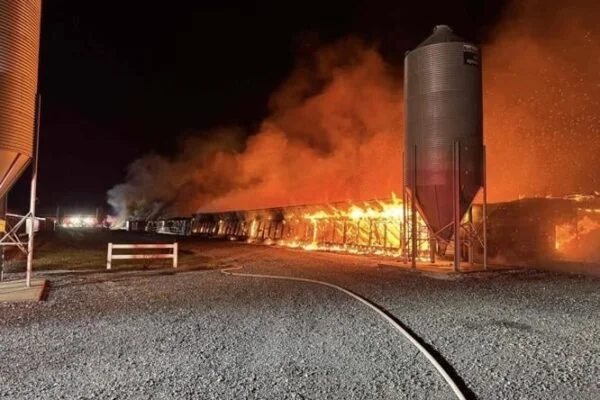
In Kuwait, drones penetrated airspace and struck operational facilities used by the U.S. military. Videos circulated online showing flames and smoke rising from areas adjacent to hangars and storage depots. Officials confirmed damage to infrastructure, though they emphasized that steps were being taken to protect personnel and secure remaining assets.
These incidents underscored the **increasing capability of non‑state and state adversaries to strike high‑value military targets using relatively inexpensive, yet effective unmanned systems and missiles — a trend that military strategists have been warning about for years. Analysts note that such campaigns blur the lines between traditional combat and hybrid warfare, where drones, cyberattacks, and indirect engagements play a major role in modern conflict.
Regional Reactions and Political Context
The strikes did not occur in a vacuum. They are part of a broader geopolitical landscape involving rival states, alliances, and shifting strategies. Several Gulf Cooperation Council (GCC) countries — including Bahrain, Kuwait, Qatar, Saudi Arabia, and the United Arab Emirates — issued joint condemnations of Iranian attacks on their territory and infrastructure.
Yet despite repeated strikes, many of these states stopped short of entering the war directly, instead focusing on defensive measures and international diplomacy. Experts note that the conflict has forced Gulf nations to reassess their security arrangements, balancing longstanding defense relationships with the United States against the growing possibility of being drawn deeper into a regional war.
Some analysts argue that Iran’s strategy relies in part on economic attrition — using drones and ballistic missiles that are relatively low‑cost compared with the advanced — and expensive — defense systems required to intercept them. This dynamic creates pressure on Gulf defenses and complicates calculations about escalation.
International and Global Impacts
The conflict has effects far beyond the Gulf region. The closure or disruption of the **Strait of Hormuz — a critical shipping route that channels about 20% of the world’s oil — has contributed to surging global energy prices and market volatility.
Other countries have expressed concern about the extended regional instability. Nations in Asia who rely on energy imports from the Gulf worry about economic fallout, while global markets have seen dramatic shifts in commodity prices and investor confidence.
Meanwhile, international organizations continue to push for negotiations and de‑escalation, fearing that continued hostilities could draw in neighboring nations and widen into a broader conflict involving additional actors.
Human Cost and Military Toll
The human toll of the conflict is significant. Reports from the region indicate:
Casualties and injuries amid missile and drone strikes in Gulf states.
U.S. military personnel wounded in follow‑up engagements, with dozens wounded and several service members suffering serious injuries.
Disruption of civilian infrastructure and risk to non‑combatants living near conflict zones.
Evacuations have taken place across the Middle East as governments moved foreign nationals and vulnerable civilians out of harm’s way due to increasing insecurity and airspace closures.
These developments reflect a stark reality: even when hostilities are focused on military targets, the **interconnected nature of modern society and regional infrastructure means civilians inevitably feel the effects.
The Evolving Nature of Modern Conflict
Analysts describe the 2026 Middle East conflict as emblematic of a new era of asymmetric warfare. Instead of traditional frontlines and clearly defined battlefields, fighting now takes place across multiple domains:
Airspace: Drones and missiles operated at long range.
Cyber and infrastructure: Attacks against technology hubs and communications centers (including reports of strikes against data facilities in Bahrain).
Marine and naval operations: Strategic shipping routes and naval bases become contested.
This multi‑domain approach reflects how modern states and non‑state actors combine traditional tools with emerging technologies to achieve strategic goals, forcing both military and civilian planners to rethink defense, preparedness, and response.
What Comes Next: Possibilities and Challenges
As of early April 2026, the Iran‑U.S. conflict remains unresolved. Leaders on both sides have offered contrasting messages — from assertions of nearing a conclusion to vows of continued pressure and retaliation.
Experts stress that a long‑term resolution will require more than battlefield engagement. It may involve diplomatic negotiations, compromise, and sustained international cooperation to address underlying tensions that go back decades, including concerns about nuclear proliferation, regional influence, and security guarantees.
There are several possible outcomes:
Ceasefire and negotiations — leading to reduced hostilities and involving international mediators.
Continued conflict — stretching over months with intermittent escalations and localized flare‑ups.
Regional expansion — if other nations are drawn in through alliances or proxy engagement.
In the short term, governments and military forces are focusing on de‑escalation mechanisms, protecting civilian infrastructure, and strengthening air defenses as Iran and allied nations remain poised to respond to developments.
Lessons and Reflections
The strikes on U.S. bases in Kuwait and Bahrain — as part of a wider regional conflict — illustrate several important lessons about modern geopolitics and security:
Global interconnectedness: Local conflicts can have far‑reaching economic, political, and security implications beyond borders.
Asymmetric capabilities: Drones and missiles have changed the nature of military reach and vulnerability.
Importance of diplomacy: Military solutions alone are unlikely to produce lasting stability without political agreements.
Human cost of war: Even distant conflicts cause disruption to ordinary lives, from energy prices to civilian safety on the ground.
As the situation continues to evolve, understanding both the context and consequences of these strikes helps individuals and communities make sense of complex global events in a way that goes beyond headlines.
Conclusion
The reported attack on a U.S. helicopter base in Kuwait and Iran’s major strikes after “bombarding” U.S. military installations in Bahrain are part of a much larger Middle East conflict that began with U.S. and Israeli strikes inside Iran. These events reflect the complex interplay of international relations, military strategy, regional alliances, and emerging forms of warfare.
By examining the historical background, the sequence of events, regional responses, and potential futures, it becomes clearer why this conflict has drawn global attention and why its consequences are so significant. Learning from these developments — and understanding both the facts and the broader context — can help readers appreciate not just what happened, but why it matters in a world that is increasingly interconnected and influenced by rapid geopolitical shifts.