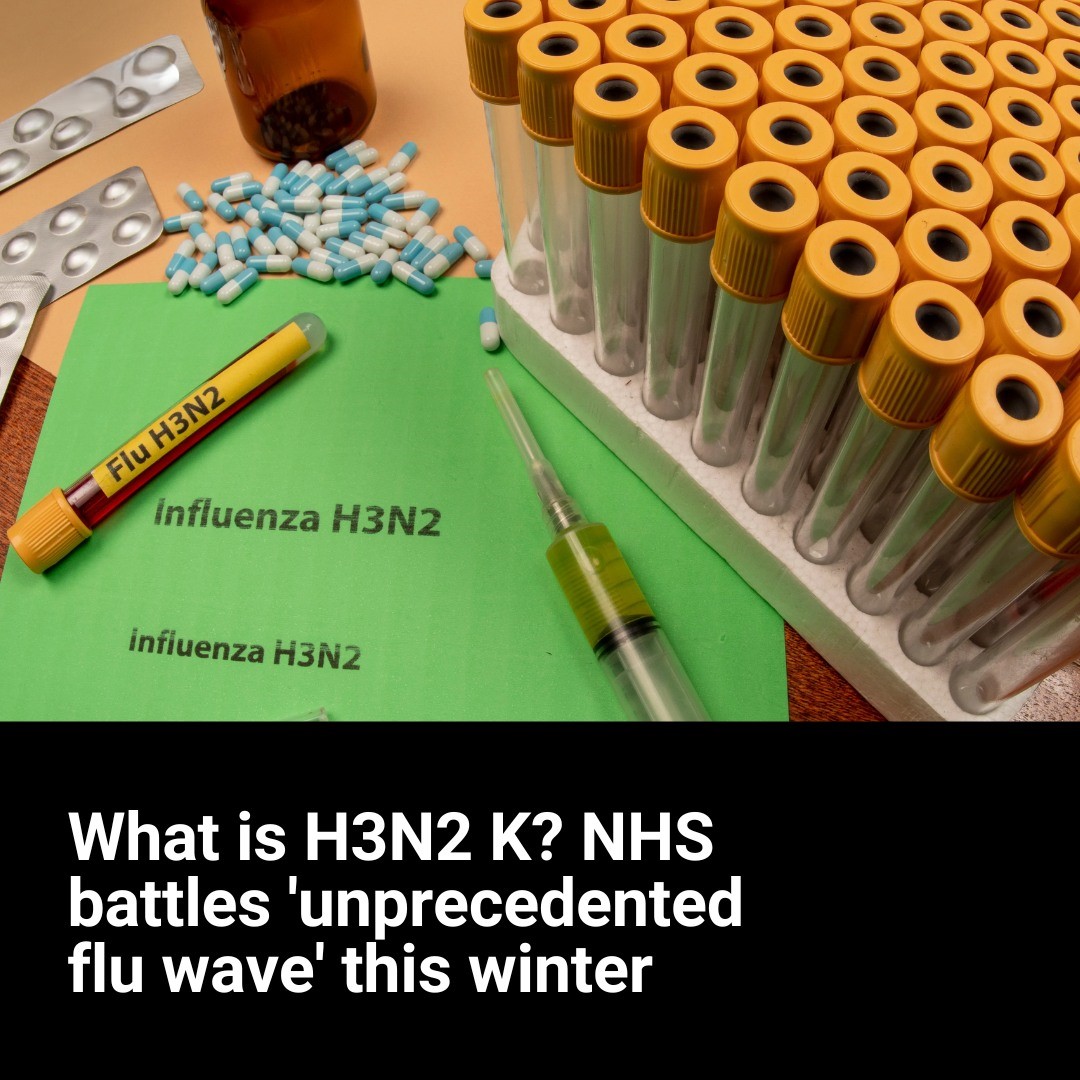

NHS bosses have reported a record number of patients in hospitals after an ‘unprecedented flu wave’ this winter – but the UK is not alone in this.
Every year, respiratory viruses, especially influenza, SARS-CoV-2 and RSV, put enormous pressure on healthcare systems throughout Europe.
And this year, some countries reported cases as early as October. In Spain, for example, the threshold for an epidemic was reached several weeks earlier than expected.
The majority of cases detected in the UK are of the A/H3N2 strain – the K variant – which is known to constantly mutate in a process known as ‘shift and drift’.
What is A/H3N2 variant K?
Influenza is split into two types, A and B, the former of which now accounts for all seasonal varieties of flu, including the 2009 pandemic H1N1.
H3N2 has actually been circulating since around 1968 with annual genetic changes designed to evade our immune systems.
Its latest version – the K variant – is thought to be behind the sudden surge of cases in several countries in Europe and Asia.
And while subclade K has attracted some concern over the speed of its dominance, medics say there is no sign it causes a more severe or virulent illness.
However because flu season in the UK is usually dominated by variant A/H1N1, immunity against the H3N2 strain may be lower in the population.
Are there vaccines?
It also means that vaccines, usually designed to protect against the most prevalent variants, may be less effective.
Vaccines are usually prepared based on a mix of the variants that were circulating the previous year.

Health bosses have reiterated that jabs are still an important tool which can protect against severe illness and are urging people to still get immunised ahead of the winter peak.
Who is most affected by the H3N2 strain?
While the risk to the general population remains moderate, the K subclade is thought to present the greatest threat to those from clinically vulnerable sections of society.
These include pregnant women, over 65s and people with underlying health conditions.
Although all age groups are affected, with around 20 per cent of the population thought to be infected each year, children have the highest rates.
Where is H3N2 spreading?
Around 90 per cent of new flu cases in the UK are thought to be from the new variant of H3N2.
The new variant has also struck hard in Asia, including in Japan and China – the latter reporting that it accounted for up to 95 per cent of new positive tests for flu.
Dr Wang Dayan, the head of the National Influenza Centre, said that a total of 17 provinces nationwide were reporting high numbers of flu cases, with all other provinces reporting moderate figures.
He said: ‘Based on the latest monitoring, it is highly likely that the national peak will be reached in early to mid-December. The number of influenza outbreaks this season is significantly higher than the previous season.’
Concerns remain that British hospitals could become overwhelmed, as NHS officials say the latest surge in cases has confirmed fears for an ‘unprecedented flu wave this winter’.

Professor Julian Redhead, the national medical director for urgent and emergency care, said that cases were ‘incredibly high’ even for this time of year.
‘The NHS has prepared earlier for winter than ever before, but despite that we know that ballooning flu cases coinciding with strikes may stretch our staff close to breaking point in the coming weeks’, he said.
The impact is likely to be further compounded by ongoing industrial action in the sector, with resident doctors set to walk out between December 17 and December 22 in a dispute over training and pay.
NHS chief executive Sir Jim Mackey said the latest round of strikes felt ‘cruel’ and were ‘calculated to cause mayhem’ while the health service is at its highest pressure.
Acknowledging ‘anger, frustration and exasperation’ among doctors, he told a board meeting earlier this week: ‘I really do hope we can find a way of avoiding this.’
What are flu symptoms?
Flu symptoms come on suddenly and can include:
- A sudden high temperature
- An aching body
- Tiredness or exhaustion
- Dry cough
- Sore throat
- Headache
- Insomnia (difficulty sleeping)
- Loss of appetite
- Diarrhoea or stomach pain
- Nausea (feeling sick)