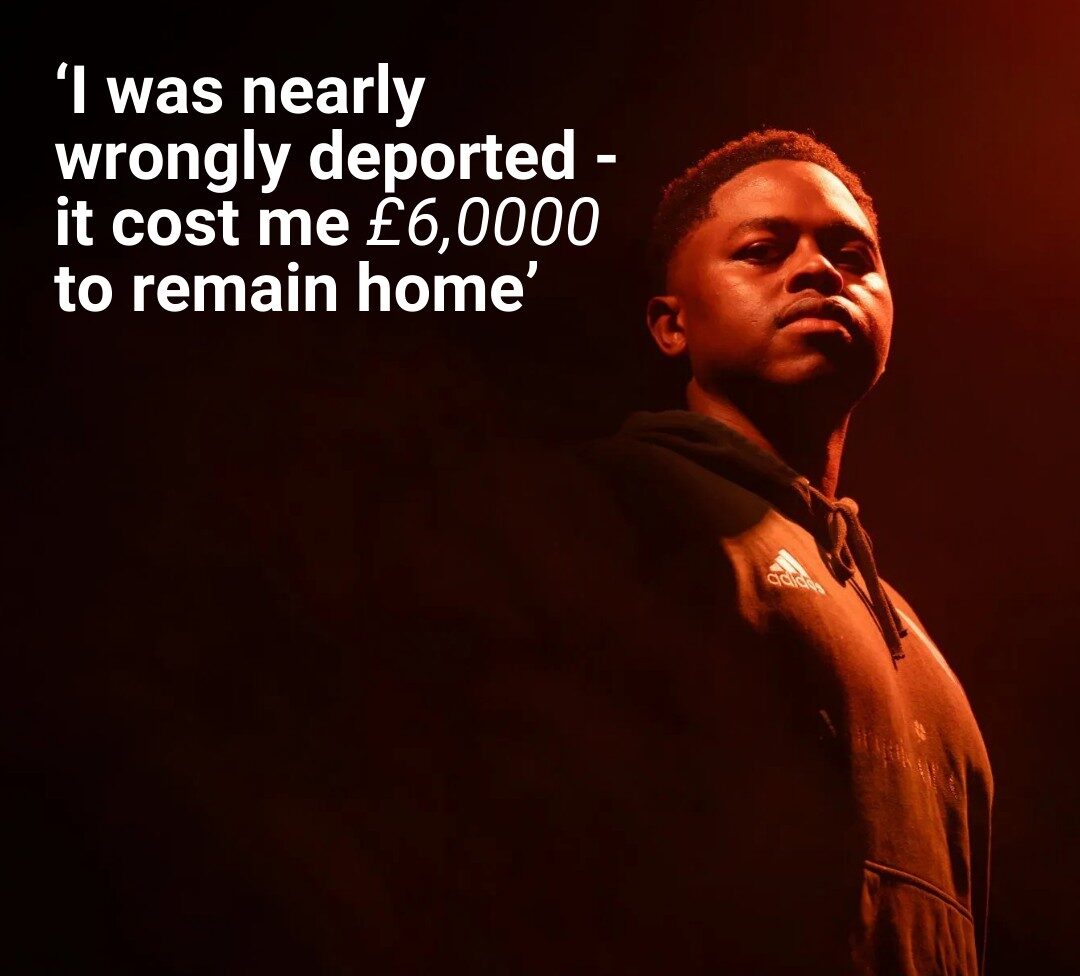
My entire life was turned upside down, one afternoon by a single sheet of paper.
On it, in bold letters, were the following words: ‘Your right to remain has been refused. You must now leave the UK.’
I’ll never forget that feeling of finding out my family could stay but I, a 20-year-old student who had called the UK home for almost a decade, had been rejected.
What followed was an agonising, debilitating and frankly exhausting three-year battle to overturn that deportation letter and prove that, not only do I live here, but I have the right to.
Though I was born in Zimbabwe, we moved to South Africa six months later.

Life there was like any other normal childhood.
Then, when I was 12, in 2007, my family moved to the UK in search of a better life. My dad was working in telecommunications and was granted a highly skilled migrant visa by the UK.
I was sad to leave but I was also excited about the life we could have in England.
Initially, we lived in Surrey while my parents searched for a house. I loved it there but we soon moved to our own house in Woking and after I started boarding school aged 14, we all relocated for the final time to the Isle of Wight in 2012.
After that, life settled into a comfortable, normal rhythm: I discovered a love for playing rugby, enjoyed attending festivals with friends, and – something that seemed even more achievable once I accepted a place to study performing arts at university.
Life was good and, as far as I was concerned, our roots were here now.

However, in 2015 my mum, siblings, and I all had to apply for indefinite leave to remain on family grounds, no longer as as my dad’s dependents, since he exceeded the travel limit on his visa unknowingly.
Our lawyers advised us to apply on family grounds – the UK was our permanent home, and we had all fully integrated into education, work and the community.
Weeks later, my mum and siblings received their letters of acceptance. Mine was not there, and it didn’t come for months.