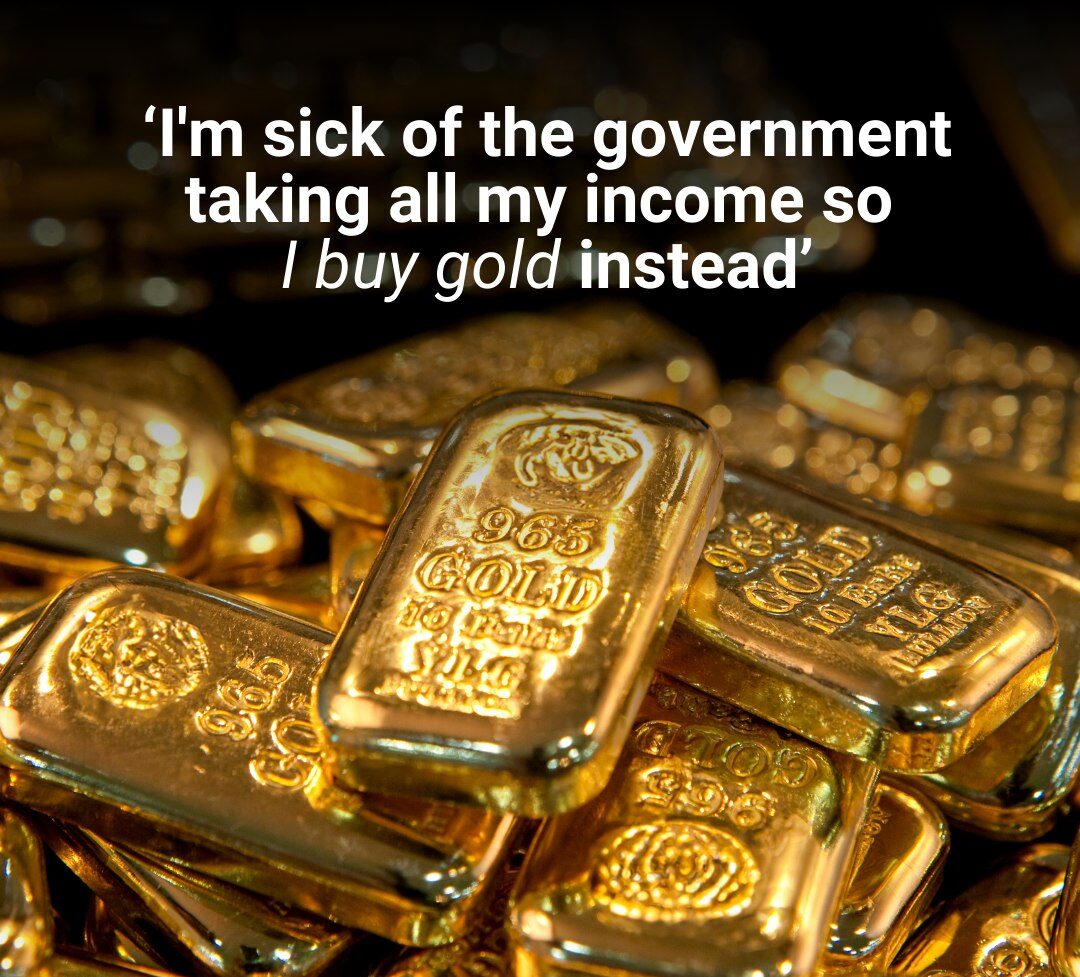
‘It is so frustrating,’ says Andy Smith, 45 and living in Guildford. ‘We get taxed on our income then have to pay more tax on our savings.
‘You invest your savings and if they’re not in an Isa you pay tax on the interest or dividend income and then you get taxed again if you sell your investments for more than you bought them.
‘It’s like the government doesn’t actually want us to be able to keep any of our own money.’
It’s a sentiment that will resonate with a lot of people – especially where they hold savings or investments outside of an Isa of pension.


And even then, the income drawn from the latter is subject to income tax.
‘I got divorced and like so many people, it left me with a lot less money than I knew I’d need in order to safeguard my own future and look after my three children.
‘Even before I separated, I hadn’t put a lot into my pension – we were bringing up a young family and we had to prioritise day-to-day costs.
‘I was aware that I was starting to think about building up savings for when I retired way behind the age curve and that I was going to have to think carefully about how to maximise the money I could put away.’
Five things to know about gold
Gold preserves value, it doesn’t compound
Gold does not generate cash flow like dividends or interest. Its long-term role is to preserve purchasing power rather than compound wealth.
Macro factors drive prices
Monetary policy, interest rates, currency value and investor sentiment matter more than supply and demand.
It’s an imperfect hedge
Gold can protect in inflation or crises but does not always do so.
How you invest matters
Physical gold, ETFs, ETCs and miners carry very different risks and costs.
Keep allocations modest
Gold is volatile and timing-driven, so small positions tend to be the safest option.
Andy, sales director at a company selling private jets, began to research how to invest the savings he did have.
‘The first thing I tried was day trading through Trading 212,’ he says. ‘I did some hardcore research and wanted to see if I could do it.
‘It was exciting and I enjoyed it, the thing is, you really need to be all over it in order to make those trades.
‘It was frustrating because I’d see opportunities and I’d miss them. Realistically, I just didn’t have time or the lifestyle to be able to do it properly.’

He decided to get all the basics in place.
‘I have an Isa with NatWest where I’ve invested in two funds that give me safe and stable growth,’ he says.
‘I also consolidated all my old work pensions into a Sipp with Legal & General and started putting more into my work pension at the same time.’
Having got that sorted, Andy wanted to invest some of his savings into something more tangible and not taxable.
‘That is harder than you might think – that type of investment is few and far between,’ he says.
Then he came across precious metals. In the UK, gold can be held in a way that is not subject to Capital Gains Tax (CGT) if you choose the right format.
‘I remember reading about when the Labour Chancellor Gordon Brown sold our gold reserves at about $250 per ounce. Gold is now $4,000.
‘Today’s business leaders and politicians can say one thing and the value of my pension can suddenly plummet,’ he says.
‘Like when markets went into a complete tailspin after the Liz Truss mini-Budget.
‘I can’t risk my wealth, my future and the future of my children on people who have no interest in my welfare or public welfare.’
Unlike investment in property, shares and other assets, gold coins that are legal tender in the UK are exempt from capital gains tax, regardless of how much profit you make.

This is because they are classed as UK currency and investment grade gold Britannia coins, gold Sovereigns and, if legal tender, gold Lunar Britannias all fall into this category.
Investment gold is also VAT-free in the UK, including gold bars and qualifying gold coins, though if you buy gold bars or gold coins from outside the UK, those are subject to capital gains tax.
Andy found Bullion Club, a firm offering an extensive selection of coins produced by the world’s leading manufacturer, The Royal Mint.
‘I booked a call with them and really liked how personalised the conversation was,’ he says.
‘There were no sales tactics and they carefully guided me through how much I was comfortable investing and what my expectation of growth was. They were really clear about the service and transparent about explaining how gold investment worked.’
Andy started with £2,000 and made his first investment into a Golden Jubilee Britannia coin.
By midway through 2023, he had spent £39,427 on buying graded gold coins, which are now worth £86,672, more than doubling his investment.
‘Obviously the price of gold does fluctuate but I’m planning to keep these coins – in storage with Bullion Club – for the long term,’ says Andy. ‘I really like how tangible investing in gold coins is.’