My name is Eleanor. I’m 71 years old, and two years after burying the love of my life, I married his best friend.
I told myself it was a second chance at companionship. At warmth. At not sitting alone in a house that still echoed with memories.
I never expected my wedding night to unravel the truth about the night my husband died.
Two years ago, my husband Conan was killed by a drunk driver on Route 7. The driver fled. Conan died before the ambulance ever reached him.
The grief hollowed me out. I stopped cooking. Stopped answering the phone. I would wake up reaching for him, only to remember the emptiness beside me.
The only person who kept me from disappearing entirely was Charles — Conan’s best friend since they were boys.
Charles handled the funeral when I couldn’t even stand. He came by daily, brought groceries, fixed things around the house. He sat with me in silence when words felt impossible.
He never overstepped. Never made me uncomfortable. He was simply there — steady and solid, like a hand on my back when I thought I might fall.
Months passed. Then a year.
One afternoon, sitting on the porch with coffee, he made me laugh. I don’t even remember the joke. I just remember the shock of it — the realization that I could still feel something other than sorrow.
He began bringing flowers sometimes. Daisies. “They remind me of you,” he’d say.
One evening, he arrived nervous, fidgeting with his coat pocket.
“Ellie, can I ask you something?”
He pulled out a small box. Inside was a plain gold band.
“I know we’re not young,” he said gently. “But would you consider marrying me?”
I didn’t answer that night. I thought about it for two days.
In the end, I said yes.
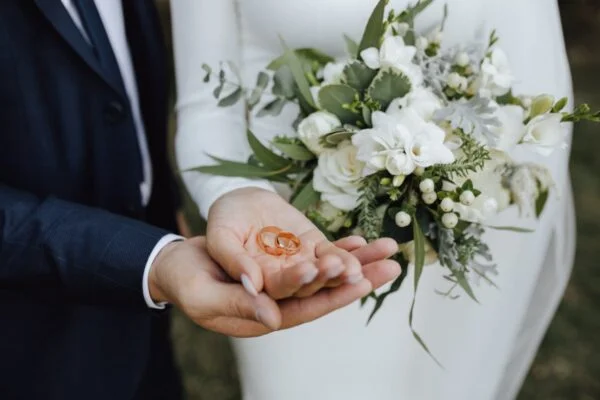
Our children were thrilled. The grandchildren already adored him. The wedding was small and simple. I wore cream. He looked handsome in his dark suit.
We smiled for photographs like teenagers pretending we still had forever ahead of us.
But during our first dance, I noticed something.
His smile didn’t reach his eyes.
At 71, you learn to spot the difference between happiness and something carefully arranged.
On the drive home, he barely spoke. His hands gripped the steering wheel too tightly.
When we entered the bedroom — decorated with roses and candles by my daughter — I felt a spark of joy.
“How beautiful,” I said.
He walked straight into the bathroom and shut the door.
Water ran. Then silence.
Then I heard it.
Crying.
I stood outside the door, my heart twisting.
“Charles? Are you okay?”
“I’m fine, Ellie,” he answered — but his voice betrayed him.
When he came out, his eyes were red.
He sat on the edge of the bed and didn’t look at me.
“You need to know the truth,” he said. “I can’t hide it anymore.”
My chest tightened. “What truth?”
“I don’t deserve you,” he whispered. “I’m a terrible person.”
“Charles, what are you talking about?”
“Do you remember the night Conan died?”
The question felt like a knife.
“Of course I do.”
“I’m connected to it,” he said. “There’s something you don’t know.”
The room seemed to shrink.
“What do you mean?”
“The night Conan died, he was coming to help me. I called him. I told him I needed him urgently.”
I felt my pulse in my throat.
“Why?”
He looked away. “It doesn’t matter. What matters is that he was rushing to me when he was hit. If I hadn’t called him, he wouldn’t have been on that road. It’s my fault. I killed my best friend.”
I stared at him.
“What was the emergency, Charles?”
He shook his head. “It doesn’t change anything.”
It felt like he was smoothing over something sharp. But he was in pieces, and I didn’t press.
“Charles,” I said quietly, “the drunk driver killed Conan. Not you.”
“But if I hadn’t called—”
“You needed your best friend. And he came. That’s what friends do.”
He held me tightly, but something in me sensed there was still more beneath the surface.
Over the next few days, he seemed lighter — as if confessing had lifted a burden.
Yet he began disappearing for long “walks.” He came home pale and exhausted. Once, when I hugged him, I smelled antiseptic.
“Were you at the hospital?” I asked.
“No,” he said too quickly. “Just paperwork.”
He was lying.
The next afternoon, he announced another walk.
Five minutes later, I followed him.
He turned toward the hospital.
My heart pounded as I trailed him inside. I kept my distance and followed the sound of his voice down a corridor.
I stopped outside a consultation room.
“I don’t want to die,” Charles was saying. “Not now. Not when I finally have something to live for.”
A doctor replied, “Surgery is your best option. Your heart can’t sustain this much longer.”
My breath caught.
His heart?
“How long do I have?” Charles asked.
“Months. Maybe a year. With surgery, much longer.”
I pushed the door open.
“Eleanor?” he said, stunned.
The doctor looked at me. “Are you family?”
“I’m his wife.”
When the doctor left, I turned to Charles.
“How long have you known?”
He looked down at his hands.
“Two years.”
“Since the night Conan died?”
He nodded.
“You were having a heart attack,” I realized.
“Yes. Mild. I panicked. I called Conan to take me to the hospital. He was rushing to get me when…”
He couldn’t finish.
“I survived,” he whispered. “He didn’t.”
The truth crashed over me — not betrayal, but tragedy layered upon tragedy.
“Why didn’t you tell me?”
“I couldn’t add to your grief. And I didn’t want you marrying me because you felt sorry for me.”
I cupped his face.
“I married you because I love you,” I said. “Because life with you feels worth living again.”
He had carried guilt and fear for two years — believing he stole his best friend’s life, hiding his failing heart while helping me survive mine.
“We’re getting the surgery,” I said firmly.
He tried to argue.
I didn’t let him.
Over the next weeks, I became relentless. Doctor visits. Research. Medication schedules. Our children rallied. The grandchildren brought drawings and promises of chess games and fishing trips.
On surgery day, I sat in that waiting room for six endless hours.
When the doctor finally emerged and said, “He’s stable,” I wept like I hadn’t in years.
Two months later, we stood together at Conan’s grave.
We brought daisies.
“I miss you,” I whispered to the headstone. “But I’m okay. I think you’d want that.”
Charles squeezed my hand.
Love didn’t erase the past.
It didn’t replace the man I lost.
But it carried his memory forward — into second chances, into forgiveness, into the fragile, stubborn hope that even at 71, life can still surprise you.
And sometimes, that is enough.
Get alerts for our most viral and important stories.